Riwayat Bakorwil Madiun

Pahlawan Street Center (PSC) merupakan kawasan wisata baru yang ada di Kota Madiun. Taman Wisata Sumberwangi atau Sumberumis kini menjadi favorit warga Madiun untuk dikunjungi. Disana terdapat replika patung merlion Singapura menjadi daya tarik wisatawan. Sebenarnya daya tarik wisata di PSC tidak hanya patung merlion, disepanjang jalan yang bernama asli Jalan Pahlawan ini masih berdiri beberapa bangunan peninggalan era kolonial Belanda. Salah satu bangunan itu adalah Kepala Badan Koordinasi Wilayah I (Bakorwil) Madiun.

Bagi warga kota Madiun Rumah Dinas Bakorwil I Madiun merupakan istana Merdeka-nya Madiun karena bentuk bangunannya yang mirip. Jika Istana Merdeka di Jakarta dulu merupakan Paleis te Koningsplein (Istana Koningsplein), maka Rumah Rumah Dinas Bakorwil I Madiun dulu adalah Residentshuis/ Residents woning Madioen atau Rumah Residen.

Rumah Dinas Bakorwil I Madiun (Dok. Pribadi)
  • Riwayat Rumah Residen Madiun.

Dinamakan rumah Residen Madiun karena merupakan tempat tinggal para residen belanda yang memimpin Residentie atau Keresidenan Madiun. Keresidenan Madiun dibentuk oleh Pemerintah Kolonial Belanda pada tahun 1830 bersamaan dengan keresidenan Banyumas, Bagelan, Kediri dan Ledok. Disaat itu pula Loudewijk De Launy diangkat oleh Gubernur Jenderal Hindia-Belanda sebagai Residen Madiun yang pertama. Untuk melaksanakan tugas-tugas pemerintahan kolonial di Madiun maka dibangunlah berbagai sarana penunjang seperti rumah residen.

Dalam catatan kaki Onghokham yang merujuk pada jurnal Tijdschrift voor Nederlandsch-Indie (TNI) Deel XXI, 1949 (2019: 133), menyebutkan jika rumah residen Madiun dibangun pada tahun 1831 di bekas benteng pertahanan belanda. Rumah residen pada saat itu menjadi loji (logee) pertama didaerah ini. Bangunannya tidak memiliki pendopo seperti rumah bupati. Akan tetapi beranda depanya dibuat lebar seperti kuil yunani dengan pilar batu tinggi besar dan berlantai marmer. Sebagai simbol hubungan antara-elite dan pribadi dari kekuasaan kolonial, residen akan menerima tamu di aula dalam rumah tersebut dibawah gambar Raja/Ratu Belanda (Onghokham, 2019: 105).

Dalam perang Jawa, Madiun disebut dengan Wonorejo yang merupakan wilayah Mancanegara Yogyakarta. Wilayah ini kemudian pusat kedudukan residen. Ketika ditempati pada (Mei) 1938 dimana E. Francis menjabat sebagai Residen Madiun, situasi rumah residen masih sepi dan dikelilingi oleh sawah hampir disemua sisinya. Di sisi timur dan tenggara, terhampar sawah yang berbatasan dengan hutan jati. Ketika seseorang memandang ke horizon, akan terlihat bahwa hamparan sawah ini juga berbatasan dengan lereng Gurung Wilis (Reinhart, 2021: 274).

Sebuah catatan menarik datang dari Franz Wilhelm Junghun (1809-1864) seorang geolog, saat dia tiba di tempat ini (Madiun) pada 13 Juni 1838. Dia kemudian menginap sebuah bangunan di kompleks kediaman residen yang serupa dengan sebuah benteng kecil atau penjara. Dia juga mengungkapkan bahwa situasi pada saat itu masih sangat sepi. Orang eropa yang tinggal di kompleks itu masih tiga dan empat orang. Baginya situasi ini serupa dengan sebuah peternakan di eropa yang dikelilingi rerumputan (Reinhart, 2021: 274).

Dalam artikel Madioen Hondred Jaar Gelegen yang dimuat dalam surat kabar Soerabaiasche Handelsblad, 27 September 1937, menyebut rumah Residen Madiun diperkirakan dibangun pada tahun 1830 atau 1831. Pada suatu laporan perjalanan tahun 1843 dan 1849, kondisi rumah residen digambarkan berbeda. Pertama, dikatakan bahwa rumah residen yang berada ditepi sungai Madiun ini bangunannya “paling indah”, akan tetapi “kurang bersih”. Kemudian yang kedua, bahwa pemukiman eropa hanya terdiri dari beberapa rumah, rumah residen adalah bangunan yang menonjol karena keindahannya dan mempunyai halaman yang luas. Keindahan rumah residen sempat dirusak oleh angin kencang dari barat daya yang menerjang pada bulan Februari 1840. Kerusakan yang ada langsung sepenuhnya diperbaiki (Teesntra, 1846: 216).

Rumah Residen Madiun sekitar tahun 1930 (KITLV)

Van Gelder (1882 : 127), juga menyebutkan jika rumah Residen Madiun terletak pemukiman orang eropa dan merupakan bangunan yang sangat indah. Pemukiman eropa pertama kali di Madiun sangat dimungkinkan awalnya terkonsentrasi di sekitar rumah residen. Hal ini berhubungan keamanan orang-orang eropa yang tinggal di Madiun. Mengenai wilayah pemukiman eropa di Madiun sempat sekilas disinggung oleh L. Adam dalam Christopher Reinhart. Dalam catatan kakinya disebutkan (2021 : 164) jika tanah desa yang bernama Patoman dibeli oleh pemerintah kolonial pada tahun 1831 untuk diubah menjadi pemukiman penduduk termasuk membangun rumah residen. Nama Patoman masih tertera di peta-peta lama. Sekarang menjadi nama lingkungan Kelurahan Madiun Lor tapi tidak tercatat secara adminitrasif.

Sebelumnnya disebutkan bahwa rumah residen Madiun dibangun bekas benteng pertahanan belanda. Bahkan Junghun juga hampir menyebut hal demikian ketika tinggal di Madiun. Jika berdasarkan tinjauan peta-peta lama, bangunan benteng sebenarnya berdiri sendiri. Benteng terletak sebelah barat laut yang hanya sekitar 200 meter dari rumah residen (lihat peta). Akan tetapi hal ini kiranya perlu diteliti lebih lanjut, apakah Junghun sempat tinggal di kompleks rumah residen atau malah di dalam benteng.

Mungkin tidak banyak yang mengetahui jika di Kota Madiun pernah terdapat benteng. Wilayah bekas benteng sekarang dikenal dengan “Beteng” yang sekarang menjadi kompleks perumahan kepolisian dan tempat ibadah. Benteng inilah yang digunakan Belanda untuk meredam pasukan Pangeran Diponegoro dalam Perang Jawa 1825-1830. Benteng ini dibangun karena saran dari seorang tuan tanah dari Yogyakarta, Pierre-Medard Diard (1794-1863). Tempat dibangun benteng disebut sebagai Kartoharjo (Bukan Wonorejo). Sesegera Bupati Madiun (Ronggo Prawirodiningrat) membangun benteng tersebut dengan menugaskan RT Sosronegoro, seorang mantan pertuas pemunggut pajak di Grobogan-Wirosari dengan perintah membangun “benteng ing Kartoharjo”. Benteng tersebut disebutkan punya dua bastion di sebelah utara selatan, yang dapat menjangkau jalan menuju Ponorogo dan juga mengawasi rumah bupati serta pasar (Reinhart, 2021 : 316-318)

potongan Peta hoofdplaats Madioen 1917 (maps.kitl.nl)

Dalam Madioen Hondred Jaar Gelegen, disebutkan jika benteng benteng selesai dibangun 1831. Berbentuk segiempat sehingga punya 4 bastion sama seperti dalam peta tahun 1917 (lihat peta). Jumlah bastion yang jelaskan sebelumnya berbeda, ada kemungkinan telah ditambah. Pada tanggal 13 April 1853 Pemerintah kolonial belanda mengeluarkan Staatsblad No. 27 yang memuat nama benteng-benteng pertahanan di Jawa dan Madura. Benteng Madiun disebut dengan nama blokhuis (Suprianto, 2021 : 33). Pembangunan benteng dan rumah residen ini merupakan sebagai tanda dimulainya era kolonisasi di Madiun.

  • Sebagai Nama Jalan.

Rumah Dinas Barkorwil I Madiun beralamat di Jalan Pahlawan No. 31 , Kota Madiun. Mungkin belum banyak yang tahu jika Jalan Pahlawan dahulu sempat bernama Residentlaan atau Jalan Residen. Penamaan ini sudah tentu mengambil dari keberadaan Rumah Residen (Suprianto, 2021 : 53). Pada umumnya penamaan jalan pada masa kolonial selalu memakai akhiran Straat, Laan, Weg dan Steeg. Akhiran Laan pada kata Residentslaan memiliki pengertian jalan indah yang ditanami pohon di sisi kanan-kirinya (Raap, 2015: 166). Dahulu Residentslaan memang dikanan-kirinya terdapat pohon. Bukti ini bahkan terpetakan dalam peta tahun 1917. Mengenai jenis pohon apa yang ditaman pada saat itu masih belum diketahui. Alberts S. Bickmore (1868: 104) dalam bukunya Travels In East Indian Archilepago menyebutkan bahwa di jalan jawa merupakan jalan yang baik karena dipinggir jalan ditanami pohon peneduh. Salah satu pohon yang digemari adalah Pohon Asam. Namun kenyataannya sekarang banyak pohon peneduh dipinggir jalan yang ditebang dengan alasan tertentu misalnya untuk keamanan pengendara.

Residentslaan merupakan bagian dari jalan pos atau postweg yang menghubungkan Surabaya dengan Surakarta. Fungsinya sama dengan Jalan Raya Pos Deandels perbedaannya cuma pada tahun pembangunannya. Jika Jalan Daendles sebagian besar mengambil rute pantai utara, pada tahun 1854 juga mulai dibangun postweg yang mengambil rute melewati Yogyakarta, Surabaya, Madiun, dan Kediri. Jalan ini dibangun membutuhkan waktu yang cukup lama yakni 20 tahun (Suprianto, 2021 : 14).

Residentslaan bisa dikatakan jalan yang menjadi titik awal lahir serta berkembangnya Kota Madiun. Belanda mendirikan Residentie atau Keresidenan Madiun pada tahun 1831 serta membentuk Gemeente atau Kota Madiun tahun 1918 di kawasan jalan ini. Bahkan hampir semua bangunan pemerintahan dan fasilitas yang dibangun oleh Belanda semuanya dipusatkan di jalan ini. Keberadaan bangunan-bangunan tersebut membuat Residentslaan tak ubahnya menjadi centrum stads atau pusat kota. Keadaan seperti ini bertahan sampai sekarang (Suprianto, 2021 : 53-55).

Bangunan sebelah utara besar kemungkinan adalah ruang servis. Ruang servis merupakan tempat gudang dan memasak. Kemudian bangunan sebelah selatan besar kemungkinan adalah paviliun khusus tamu. Menariknya disebuah taman rumah dinas bakorwil bisa kita temui arca-arca. arca-arca yang terindetifikasi diantaranya adalah nandi, arca dewi, arca agastya, panil relief dan arca durgamahisasuramardini. Arca-arca ini kemungkinan dahulu merupakan milik para residen dan diletakan ditaman-taman sebagai hiasan. Mengenai asal-usul temuannya kemungkinan semuanya berasal dari Madiun.

Berdasarkan hasil pendataan obyek diduga cagar budaya (ODCB) Kota Madiun, ada setidaknya tiga bangunan lagi yang berasitektur sama dengan Rumah Dinas Bakorwil. Ketiga bangunan itu adalah Rumah Kapiten China (Alun-Alun Selatan), Rumah Rokok Grindo (Jalan Kutai) dan Rumah Diesel Redjo (Jalan H. Agus Salim. Arsitektur rumah dinas bakorwil ini tergolong langka dan sangat perlu dilestarikan. Itulah sebabnya pada tahun 2017 Dinas Kebudayaan dan Pariwisata Kota Madiun melakukan pendaftaran disertai kajian untuk rumah dinas bakorwil. Pendaftaran dan Kajian ini gunanya untuk menetapkan rumah dinas bakorwil sebagai Cagar Budaya. Hasilnya pada tahun 2019 Kompleks Rumah Dinas Bakorwil telah menjadi Cagar Budaya peringkat Kota.

  • Daftar Rujukan

Bickmore, Alberts S. 1868. Travels In East Indian Archilepago. London : John Murray, Albemarle Street

Handinoto, 1994. Indische Empire Style : Gaya Arsitektur “Tempo Doeloe” Yang Sekarang Sudah Mulai Punah. Dimensi 20/Ars Desember 1994.

Onghokham, 2018. Madiun dalam Kemelut Sejarah: Priyayi dan Petani di Keresidenan Madiun Abab XIX. Jakarta: KPG

Raap, Olivier Johannes 2015. Kota di Djawa Tempo Deoloe. Jakarta : KPG

Reinhart, Christopher (ed). 2021. Antara Lawu dan Wilis : Arkeologis, Sejarah dan Legenda Madiun Raya berdasarkan Catatan Lucien Adam (Residen Madiun 1934-38). Jakarta : KPG.

Suprianto, Andrik. 2021. Nama-Nama Jalan di Kota Madiun Masa Kolonial 1918-1942 : Asal-usul dan Perubahannya. Kediri: Pasak Kadhiri.

Soerabaiasch Handelsblad, 24 September 1937. Madioen Honderd Jaar Geleden : Komst van Europeesch Bestuur.

Teenstra, M.D. 1846. Beknopte beschrijving van de Nederlandsche overzeesche bezittingen voor beschaafde lezers uit all standen uit de beste bronnen en eigen ervaring in Oost- en west – Indien geput. Groningen: J. Oomkens J. Zoon ,

Van Gelder, W. 1882. Beschrijving van het Eiland Java En Zijn Bewonners, Voor De Scholen in Nederlandsche-Indie. Batavia : G. Kolff & Co.

Van Hoevel, Dr. W.R. 1859. Tijdschrift voor Nederlandsch-Indie (TNI) XXI Deel I. Zat- Bommel: Joh Noman & Zoon.

Candi Sebayi

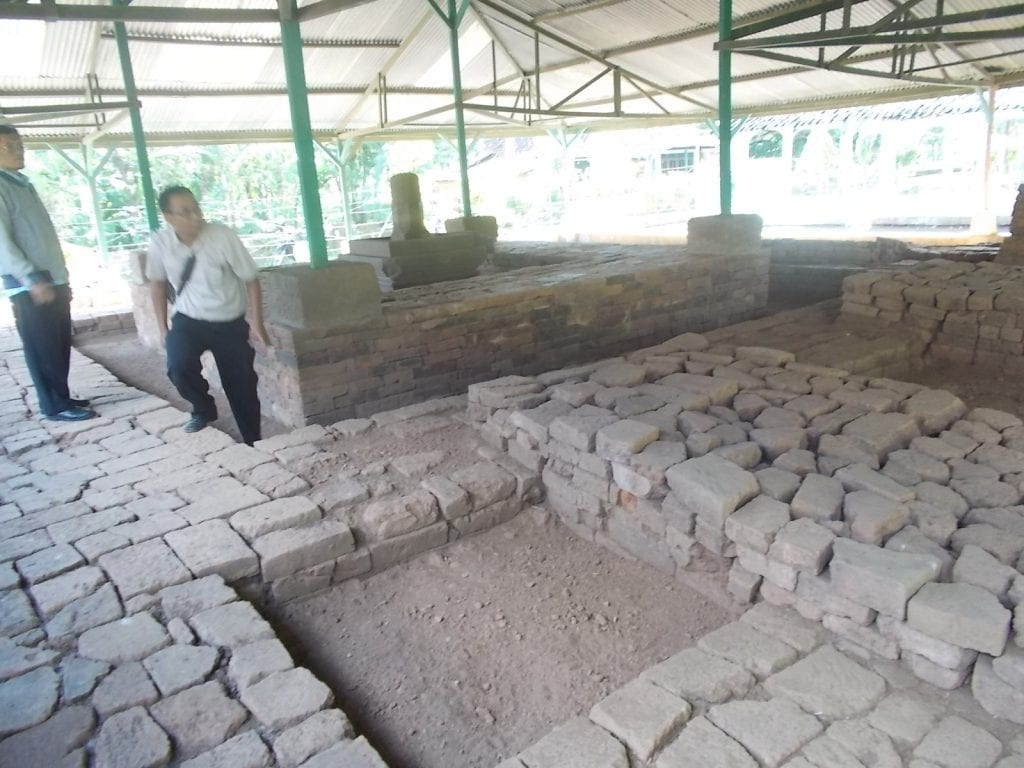
Deskripsi : Lokasinya berada di Desa Sebayi, Kecamatan Gemarang, Kabupaten Madiun. Situs Candi Sebayi berada di area hutan milik perhutani. Berdasarkan deskripsi dari Balai Arkeologi Yogyakarta, Situs ini berupa reruntuhan bangunan candi dengan bahan batu andesit dan bata. Reruntuhan candi ini ditemukan pada tahun 2006. Di Area situs dijumpai kumpulan bata candi yang sudah tertata namun tidak berbentuk bangunan serta sebaran batu candi yang masih dijumpai disekitarnya. Area sebaran batu candi diperkirakan 4 hektar. Lokasi ini dahulu dimanfaatkan sebagai lahan pertanian yang kemudian digunakan sebagai lahan Perhutani. Bata-bata polos, dan berukuran besar, sedangkan batu-batunya dari bahan andesit ada yang memiliki pelipit, takikan, sisi genta, batu dengan relief bunga melati berukuran 15 x 20 x 35 cm. Menurut informasi bahwa di lokasi ini pernah dijumpai struktur pagar dengan tinggi 1,5 meter namun hancur karena tertimpa pohon jati.

Cerita Lisan di Balik Candi Sebayi : Menurut kesaksian peladang di sekitar reruntuhan candi, Mbah Mukimin menuturkan, bahwa dulu saat zaman Belanda candi ini masih berdiri megah walaupun terlihat candi seolah dalam keadaan belum sempurna, pada saat Agresi militer Belanda tahun 1949 Candi ini sempat menjadi ajang pertempuran dalam penyerangan Belanda ke Loji-loji Perhutani. Setelah Jatuhnya rezim Suharto dan berganti era reformasi juga terjadi penjarahan arca-arca oleh orang-orang dari luar Desa Sebayi, karena masyarakat Sebayi sendiri mempunyai kepercayaan dan kearifan bahwa tempat itu adalah keramat dan tidak berani membawa benda-benda apapun di sekitar situs Candi Sebayi. juga ditutur oleh Kepala Desa Sebayi Heru Wiratno dan Mantri Perhutani Pak Santoso, bahwa disekitar candi ini masih ada beberapa reruntuhan batu bata kuno, juga di Desa Kaligunting ada reruntuhan Batu bata kuno masyarakat menyebutnya “mbata sekawit” juga arca golek dari batu yang dipercaya sebagai asal penamaan Desa Sebayi yang sampai dengan hari ini belum ditemukan keberadaannya

Reruntuhan Candi Sebayi Saat Musim kemarau 2023

Catatan Arkeologis lain di Desa Sebayi : Selain Situs Candi Sebayi, Dinas Kebudayaan Kabupaten Madiun sempat mencatat sebuah Punden makam kuno yang terletak di Dusun Sebayi. Punden tersebut dinamakan Punden Kromodipuro. Punden ini berada disebelah barat Sungai Sebayi atau berjarak 300 meter tenggara SMK 1 Gemarang. Menurut warga sekitar, punden ini merupakan cikal bakal dari penamaan Desa Sebayi. Konon tokoh yang bernama Kromodipuro tersebut dimakamkan saat masih bayi.

Jauh sebelumya dengan berdasarkan catatan Theodore Altona (Seorang Botani), di daerah sebalah utara Dusun Ketupu sempat dicatat adanya sebuah candi. Tempat itu oleh masyarakat Desa Sebayi saat itu dikenal dengan nama Sekar Putih. Sekar Putih mempunyai arti Bunga para imam atau Kepala Imam). Di tempat tersebut sempat ditemukan sebuah arca ganesha yang sangat lapuk dan benda-benda lainya. Benda-benda lainnya tersebut kemudian dibawa ke Desa Sebayi dan Caruban. Menarik untuk dikaji apakah sekar putih yang dimaksud adalah candi sebayi sekarang ini?. Selain itu, di Dusun Ketupu sempat ditemukan batu patok batas desa dekat Sungai Sebayi. Kemudian, Jan Knebel (1906) sempat mencatat cerita legenda tentang punden kramat dandang yang berada di Hutan sebelah barat Dusun Ketupu, Desa Sebayi.

Laporan peninjauan Potensi Arkeologis di Kabupaten Madiun, Jawa Timur. Yogyakarta: Balai Arkeologi Yogyakarta, 2014

Reinhart, Christopher (ed). 2021. Antara Lawu dan Wilis : Arkeologis, Sejarah dan Legenda Madiun Raya berdasarkan Catatan Lucien Adam (Residen Madiun 1934-38). Jakarta : KPG.

Knebel (J.), 1906. Legenden over de plaatsen van vereering (poendèn), de plaatsen waar offers gebracht worden (panjadranan), de plaatsen waar geloften gedaan worden (kahoelan, panadaran), of waar men zich afzondert om eene openbaring te ontvangen (panëpèn), in het regentschap Madioen. Dalam Jurnal T. B. G. XLVIII, 527.

http://satriotomo-gombal.blogspot.com/2014/02/candi-sebayi-harapan-baru-sejarah-dan.html)

Laporan peninjauan Potensi Arkeologis di Kabupaten Madiun, Jawa Timur. Yogyakarta: Balai Arkeologi Yogyakarta, 2014

Reinhart, Christopher (ed). 2021. Antara Lawu dan Wilis : Arkeologis, Sejarah dan Legenda Madiun Raya berdasarkan Catatan Lucien Adam (Residen Madiun 1934-38). Jakarta : KPG.

Knebel (J.), 1906. Legenden over de plaatsen van vereering (poendèn), de plaatsen waar offers gebracht worden (panjadranan), de plaatsen waar geloften gedaan worden (kahoelan, panadaran), of waar men zich afzondert om eene openbaring te ontvangen (panëpèn), in het regentschap Madioen. Dalam Jurnal T. B. G. XLVIII, 527.

istilah Ramadhan in English

Istilah-Istilah Bulan Ramadan dalam Bahasa Inggris

Gaya Hidup

Istilah-Istilah Bulan Ramadan dalam Bahasa Inggris

2022.04.12

Bulan Ramadan sebentar lagi akan datang. Sesuai dengan momentum Ramadhan, dalam artikel ini kita akan membahas mengenai istilah-istilah yang biasa digunakan selama Ramadhan dalam bahasa Inggris:

Berikut adalah istilah-istilah yang biasa ditemukan dalam bahasa Inggris:

1.      Puasa: Fast (verb)/Fasting (Noun)
Contoh dalam kalimat:
I’m fasting now, sorry I can’t go out to lunch with you. (Saya sedang berpuasa, maaf saya tidak bisa ikut makan siang dengan kamu)

2.      Buka puasa: break a fast/breaking a fast
Contoh dalam kalimat:
What time is the break fasting time? (Jam berapa waktunya ber buka puasa?)

3.      Sahur: Pre-dawn meal
We take the pre-dawn meal to start the fasting (Kami makan sahur sebelum melakukan puasa)

4.      Mudik: Lebaran homecoming
Indonesian usually do the Lebaran homecoming tradition. (Orang Indonesia melakukan tradisi mudik setiap lebaran.

5.      THR: Lebaran bonus/Religious Holiday Allowance
I hope the company can give Lebaran allowance early (Saya berharap perusahaan bisa memberikan THR lebih cepat)

6.      Imsak: Imsak
Finish your meal before imsak! (Selesaikan makan mu sebelum waktu Imsak)

7.      Magrib: Maghreb/dusk prayer
We will break the fast when the dusk prayer begin (Kami akan berbuka puasa saat terdengar adzan magrib)

8.      Subuh: dawn/dawn prayer
Don’t forget to take Subuh dawn prayer after imsak. (Jangan lupa untuk sholat subuh setelah imsak)

9.      Idul Fitri: Eid Mubarak/ Eid Al-fitr
We celebrate Eid Mubarak after one month fasting. (Kami merayakan idul fitri setelah satu bulan berpuasa).

10.  Kurma: Date
Date is one of the food good for breaking your fast. (Kurma adalah salah satu makanan yang
bagus untuk berbuka puasa)
It is recommended to break a fast by eating 2 or 3 dates fruit, as it provides the body with sugar dan helping restore low blood sugar after fasting all day long. (Dianjurkan untuk berbuka puasa dengan memakan 2 atau 3 buah kurma, karena kurma dapat menyuplai pasokan gula bagi tubuh dan membantu mengembalikan kadar gula darah setelah berpuasa seharian)

11.  Membayar hutang puasa/qhada puasa: make up the fast
Before Ramadhan you should make up the fast you left behind last year. (Sebelum Ramadhan, kamu harus membayar puasa yang terhutang tahun lalu).

12.  Ziarah makam: Pilgrimage/visiting grave
The pilgrimage usually full of people who wants to visit before Ramadhan. (Pemakaman akan penuh dengan orang yang akan ziarah sebelum Ramadhan)
Don’t be surprised when you see so many people coming to graveyard to make pilgrimages, it has been a tradition for a long time. (Jangan heran kalau kamu menemukan begitu banyak orang berdatangan ke pemakaman untuk berziarah, itu sudah menjadi tradisi sejak lama)

13.  Halal-bihalal: halal bihalal/forgiving each other
Lebaran is the time for forgiving each other and doing halal bihalal. (Lebaran adalah waktu yang tepat untuk saling memaafkan dan melakukan halal bihalal.

14.  Zakat/sedekah: alms
We have to do the alms before Eid Mubarak. (Kita harus menunaikan zakat sebelum idul fitri).

15.  Solat Tarawih: Tarawih prayer
Rina doing her tarawih prayer at Masjid Agung. (Rina sholat tarawih di Masjid Agung).

16.  Adzan: call to prayer
We have to listen the call to prayer first before doing the prayer. (Kita harus mendegar adzan dahulu sebelum bisa sholat).

17.  Malam Lailatul Qadar: Lailat Al-Qadar/The Derivation Night of Koran
Every Ramadhan we expect to meet Lailat-Al-Qadar. (Setiap Ramadhan kita mengharapkan untuk bisa bertemu malam Lailatul Qadar.

Demikian istilah-istilah bahasa Inggris untuk bulan Ramadhan. Kamu bisa gunakan dalam berbahasa Inggris sehari hari ya.

Wonorejo Temple

WONOREJO TEMPLE SITE

Santan Wonorejo Village, district  Mejayan, Madiun Regency

Do you know, Is there a temple in Madiun?

Yeah…this is one of the heritage temple in Madiun. 

At this location was originally a mound of land overgrown with two large trees, jackfruit and kepuh. Under the tree there is a stone altar where sesajen was placed, because the place is considered a punden by the community in Santan (Punden is the place of danyang or the first trespasser of this area).

The beginning of the discovery of the temple, on the night of Friday. Javanese calendar is Jum’at Wage, June 30, 1989 the village elder, Mr. Sukarto Simun received a revelation from a grandfather, named Buyut Resi Santanu Murti or also called Mbah Buyut Bejo, in a dream Mr. Karto was told to build his house, “degno omahku” Ki Buyut’s message, Mr. Sukarto Simun was guided to the location of the Punden Santan . The next day Mr. Sukarto Simun searched for what was meant in the dream, then dug a mound of soil about 1.5 meters and found a sloping stone, then also came the Wonorejo Village Head and the Kuncen Village Head, supporting the excavation, until news of the discovery of the Wonorejo temple spread widely. Then, on March 16, 1996, research was conducted by the East Java Heritage Conservation Center, and in 1997-1998 further research was conducted by the East Java Heritage Conservation Center, as well as restoration and construction of protection and guardrails until now. This temple was named CANDI LINGGA YONI or Wonorejo Temple.

Description of Wonorejo Temple

– Red brick building measuring about 14 x 14 m

– Consists of 3 steps / terraces

– The top is in the form of Lingga and Yoni

– The phallus measures 70 cm high and 31 cm wide, the Yoni is 163 cm long, 120 cm wide and 92 cm high. both weigh approximately 2000 kg.

– Face to the west, the yoni spout faces north.

– It is thought to be equipped with Durga statues in the north, Ganesha statues in the east, Shiva / Mahaguru statues in the south. 

  (until now not found)

– On the four corners of the temple there are umpak, as a support for the temple pillars.

The meaning of Lingga Yoni is that Lingga is a symbol of the embodiment of Lord Shiva and Yoni as the embodiment of Dewi Durga (wife of Lord Shiva). It can also be interpreted as a symbol of fertility.

Wonorejo Temple is believed to have been a place of worship for Hindus during the Majapahit period, as well as a place for the ashes of important figures at that time.

Apart from the myths and sacredness of Wonorejo Temple, the existence of Wonorejo Temple must be preserved as an ancestral heritage, cultural heritage, and as evidence of the existence of past civilizations in the Caruban and Madiun regions in general.

At this time, Wonorejo temple is developed into a cultural tourism site, research for science, and authentic evidence of tracing the nation’s history in the Madiun region and its surroundings.

Sources : Dinas Kebudayaan Kab Madiun

Exposition Text

  1. Pengertian

EXPOSITION :teks yang bertujuan memaparkan, ide, pendapat atau sudut pandang penulis pada sebuah issue atau permasalahan di sosial masyarakat berdasarkan bukti-bukti yang ada dan bisa dipertanggungjawabkan.  teks ini juga disebut juga dengan argumentative text.

  1. Analytical exposition text adalah sebuah teks yang berisikan pendapat penulis tentang hal- hal yang terjadi di sekitarnya. Baik itu suatu benda, tempat, ataupun kejadian, tanpa mengajak pembaca untuk melakukan sesuatu. Analytical Exposition Text berisi pemikiran penulis tentang hal-hal yang terjadi di sekitarnya, baik benda, kejadian, ataupun tempat.

Teks ini termasuk dalam argumentative text karena menunjukkan suatu pendapat (argumen) terhadap sesuatu.

Analytical Exposition Text

a)    Thesis/idea

Pada bagian ini, thesis adalah bagian yang memberitahu pembaca tentang topik utama dan sudut pandang penulis. Thesis selalu bisa kamu temukan di paragraf pertama teks.

Di bagian ini, pembaca juga bisa melihat mengapa penulis memberikan pendapat terhadap hal yang menjadi topiknya.

b)    Arguments

Di paragraf selanjutnya, kamu bisa menemukan bagian arguments. Arguments adalah pendapat untuk mendukung topik utama yang telah disampaikan sebelumnya. Biasanya di

dalam analytical exposition terdapat lebih dari dua argumen. Semakin banyak argumen yang ditampilkan, pembaca akan semakin percaya bahwa topik yang dibahas adalah topik yang penting atau membutuhkan perhatian.

c)     Reiteration/kesimpulan

Setelah bagian thesis dan arguments sudah dipaparkan, tentu saja ditutup dengan kesimpulan atau reiteration. Bagian ini selalu terletak di akhir teks dan menjadi paragraf penutup tulisan.

Reiteration adalah penegasan kembali posisi dan pendapat penulis terhadap topik utama. Reiteration juga sering disebut sebagai conclusion, yang mana artinya adalah kesimpulan.

  • 2      Kaidah Kebahasaan Analytical Exposition Text
  1. Penulisan analytical exposition text menggunakan Simple Present Tense.
  2. Menggunakan kata-kata yang mengekspresikan pikiran atau             perasaan penulis, contohnya: experience, feel, know, realize, sense, think, dll.
  • Menggunakan connective words (kata penghubung).
    • Penggunaan connective words bertujuan untuk menghubungkan antar ide, baik itu frasa, klausa, kalimat, maupun paragraf.
    • Connective words ini banyak fungsinya. 3 fungsi dari kata hubung yang paling sering dipakai dalam analytical exposition text adalah:
      • Adding information, yaitu menambahkan informasi. Contohnya seperti : and, moreover, in addition, dan also.
      • Contrasting information, yaitu mengkontraskan sesuatu. Contohnya seperti: but, however, dan even though.
      • Causality,   yaitu   menunjukkan   sebab-akibat.   Contohnya   seperti because, therefore, thus, consequently, despite, due to, for that reason, dll.

Hortatory Exposition

  1. Hortatory Exposition

Hortatory Exposition adalah jenis teks atau materi lisan persuasif dalam Bahasa Inggris yang digunakan untuk menjelaskan pembaca atau pendengar bahwa sesuatu tidak boleh atau harus dilakukan. Sama seperti teks Analytical Exposition, jenis teks ini juga sangat populer di kalangan akademika dan dapat ditemukan dalam buku-buku ilmiah, jurnal, majalah, artikel koran, pidato akademis, dan lain sebagainya.

Jenis teks ini memang sangat identik dengan teks Analytical Exposition, namun terdapat tujuan yang berbeda pada kedua teks ini. Jika teks Analytical Exposition bertujuan untuk membuat pembaca atau pendengar sadar akan suatu isu, teks ini bertujuan untuk memaksa pembaca atau pendengar untuk setuju dengan apa yang disampaikan. Selain itu, terdapat perbedaan pada struktur teks untuk membedakan kedua jenis teks tersebut.

  1. Ciri-ciri Hortatory Exposition

Terdapat beberapa ciri-ciri dari teks ini, yaitu:

Merupakan teks persuasif yang disertai alasan-alasan yang mendukung.

Menggunakan Simple Present Tense

Menggunakan kata penghubung seperti first, second, third, next, furthermore, additionally dan lain sebagainya.

Berisi rekomendasi yang biasanya diawali dengan: in my opinion (pendapat saya), it is better…(hal terbaik), for these reasons (karena hal itu), we should…(kita seharusnya), I think…(saya kira…) dan lain sebagainya.

  • Generic Structure of Hortatory Exposition

Hortatory Exposition mempunyai generic structure tersendiri. Dalam teks ini terdapat tiga bagian penting yang harus dimiliki, yaitu:

  1. Thesis/idea

Berisi pendapat penulis atau pembicara terkait topik yang dipermasalahkan.

  • Arguments

Arguments berisi tentang pendapat-pendapat yang mendukung ide pokok. Semakin banyak pendapat yang dituliskan, maka sebuah Hortatory Exposition Text semakin menarik karena pembaca atau pendengar cenderung percaya terhadap suatu peristiwa jika terdapat banyak pendapat yang mendukung di dalamnya.

  • Recommendation

Berbeda dengan teks Analytical Exposition yang mempunyai Conclusion (kesimpulan), teks ini mempunyai bagian rekomendasi untuk pembaca sebagai penutup teksnya. Rekomendasi berisi saran yang ditujukan kepada pembaca mengenai topik terkait yang dibahas pada teks.

  1. Asesmen Formative 1 :

Exercise :

After learning about Analytical exposition, please :

  1. Choose one of the topic below !
  2. Make a Mind map related the topics given
  3. Discuss it with your group
  4. Present it in front of the classroom after it is done.

Topics :

  1. Do you agree with Junk Foods sold at school?
  2. Do you agree with the usage of the Plastic Drinking Bottles ?
  • Asesmen Formative 2 :

Exercise :

After learning about Hortatory exposition, please :

  1. Choose one of the topic below !
  2. Make a Mind map related the topics given
  3. Discuss it with your group
  4. Present it in front of the classroom after it is done.

Topics :

  1. Do you agree with Junk Foods sold at school?
  2. Do you agree with the usage of the Plastic Drinking Bottles ?
  3. Why Students Should register in the Extra organization ?
  4. Why we have to save  and take care of our culture?

Asesmen  Sumatif ( Portofolio )

  1. Arrange the   Analitical Exposition Text and Hortatory Exposition Text by your own Factual Idea.
    1. Publish in online media, for instances : Blog, Microsite, Googlesite, Tiktok, Instagram or facebook

Let’s practice conversation

Conversation with receptionist

Visitor: Excuse me.

Receptionist: Yeah, what can I do for you sir?

Visitor: Could you help me to meet Mr. R.K. Bhatia, the manager of this company?

Receptionist: I am sorry you can’t meet him today. He is extremely busy. Did you take an appointment?

Visitor: Yes, I did. He himself called me today.

Receptionist: Actually he is busy in an urgent meeting with a delegation from Japan. And he ordered me not to allow anybody to meet him till 3pm today.

Visitor: It is very important for me to meet him today as I am flying to America tomorrow.

Receptionist: Would you wait for a minute? Let me check with the manager please. What’s your good name sir, and from which company are you coming?

Visitor: R.S. Sagoo, Senior Computer Engineer,
Thunderbird Graphics.

Receptionist: Thank you sir. (After talking to the manager on intercom)…. I hope you won’t mind sir. You will have to wait for half-an-hour. Mr. Bhatia will definitely meet with you.

Visitor: It’s all right. I’ll wait.

Receptionist: (Pointing out to sofa) Please have a seat there. Meanwhile I am arranging coffee for you.

Visitor: (Smilingly) Thanks.

In situation speaking a person learn to speak a few sentences in a particular situation.

  1. Asking to Receptionist

X: Excuse me. Miss!

Y: yes. What can I do for you, Sir!

X : Could you help me to meet the Manager, here!

Y: yes sure, do you have an appointment!

X: not yet. but it is very important

Y: ok. would you wait a minute !

X: with my pleasure.


2. Borrow Friends Book

X : Could I borrow your book, please! I have to prepare for the rest, tomorrow.

Y : yes, I’d love to.

Raju, I have lost my English Book – ‘Guided Reading’. Can you borrow your book for one day? My test is tomorrow. I have to prepare for the test. Thanks.


3. Birthday Invitation

Hello Ravi, how are you? You will be glad to know that tomorrow is my birthday. I am celebrating it at my home. I shall cut the cake at 7pm. There is dinner afterwards. I invite you. Please do come.

X : I would like to invite you to my birthday , Could you come at 7 pm tomorrow?

Y : yes, I’d love to.


4. Go Shopping

X: Hello! Are you free in the evening?

Y: yes, can I Help you?

X : Could you go with me to the super market. I have to buy some dresses. Would you accompany me at 6 pm.

Y : How do we go there?

X : We will go to Ramayana Mall with my motor bike.


4. Order Dishes

X : Excuse me! May I Help you.

Y : Please note down my order: one plate fried noodles, a bowl meatball, a bowl chicken soup and a plate pastry. And two glass of orange juice. Send the dishes at the Corner table.

X : yes, wait a minute. Please!

( after dinner is up)

Y : May I have the bill, please!

X : here you are.


5. How did you Celebrate your Birthday?

I celebrated my last birthday at my home. My family decorated the drawing room. I invited my friends only. My mother prepared tasty food. We enjoyed music and dance.


6. Borrow your friend’s car

Hello, Ramesh? How are you? I am Raju. My car has broken down. There are guests at home. Can you give me your car for one day? Thanking you very much.


7. Calling a taxi

Is it taxi stand? We need a taxi. We have to go to IGI Airport. There are only three passengers and some luggage. What will be the charges? Please send one taxi at 10pm. Note down my address and phone no……


8. Urgent Need of Money

Hello Puneet, how are you? Puneet I want Rs.500/- urgently for my school fee. My parents are not here. They have gone out of Delhi for two days. As soon as my parents come back I shall return your money. Thanks.


9. Congratulating Your Friend

Hello, Sushma! I am very happy today. Heartiest congratulations to you on passing with good marks. I saw your result in the newspaper. May God give you success in every field of life! When will you give me treat? I shall wait for your phone.


10. Invite Your Uncle To the Party

Hello uncle, how are you? I am Amrita Speaking. Uncle, there is a good news for you. I have got job in a multinational company. So we are giving a party at home on coming Sunday. The party will start at 7 pm. We invite you with family. We shall wait for you.

11. Booking room in a hotel

Hello, is it Taj Palace, Shimla? I am speaking from Delhi. I want to book one double-bed room. What are your charges ? Please book the room for three days. We shall reach Shilmla on 5th of next month.

12. Advise Your Brother to Work Hard

Aman, come here. I always see you sitting in front of TV. Why do you not study? You may fail in the examination. So, I advise you to work hard and get good marks. Without study you can’t make a good career.

13. Call a Doctor

Hello, is it Vandana Clinic? Good morning doctor! I am speaking from Ramesh Nagar. Doctor, my neighbour has very high fever. He is unable to come to your clinic. Please, come immediately. The address is………..

14. Demand Pocket Money From Your Father

Good evening, papa! I have to talk to you. You don’t give me pocket money. In college my friends bring pocket money. They can purchase what they want. Some friends make fun of me. I feel ashamed. Can you please give me Rs.100/- every week. I promise that I shall not misuse my pocket money

15. Buying A TV

Excuse me! I want to buy a good television. It should have at least 100 Channels and 21 inches screen. It must be attractive. Will you suggest me one? And, can I pay in installments?

In situation speaking a person learn to speak a few sentences in a particular situation.


16. Trade Fair Programme

Hello Meena! I am Rajani speaking. How are you? You know International Trade Fare is going on at Pragati Maidan. We can visit there on Sunday. We shall go in my car. Please reach my home at 11am.
17. Advising your brother

Rahul, come here. You often tell a lie. It is not a good habit. Nobody will believe you. It may spoil your career. So you must improve yourself. I hope you will follow my advice.


3. Scolding a Kid

Manu! What are you doing? Why are you breaking your toy? You often break your toys. What is the reason? Toys are costly. You must keep them with care. Otherwise we shall never bring toys for you.


4. Inviting an MP

Good morning, sir! I am speaking from Delhi Welfare Society. We are holding annual function on coming Sunday. We are inviting you as the chief guest. We hope you will grace the occasion. Please come at 9am. We shall be thankful to you.


5. Scolding younger brother

Mahesh, come here. How did you break the headlight of my bike? You drive very fast. If you don’t drive carefully I shall never give you my bike again. Now get the headlight repaired from your pocket money.

1. Magic Show

Last Sunday I saw a magic show in Talkatora Stadium. I went there with my friends. The show started at 8pm. The magician showed many good tricks. It was a wonderful show. The audience clapped many times. I also enjoyed the show very much.


2. Report Car Theft

Excuse me! Please write my F.I.R. My car has been stolen. I had gone for shopping in Rajouri Garden market. I had parked my car in the parking place. When I came back from shopping my car was not there. Its colour is blue. It is Honda City. Its number is …….


3. Going on trip

Good morning, papa. Our school has arranged a trip to Ooty. Charges of the tour are Rs.1500/-. My all friends are going. I also want to go. Please give me permission to go. Thanks papa.


4. Uncle has got late for dinner

Hello uncle! Where are you late? Why have you not reached as yet? We are worried. You were to come at 8pm. Now it is 9pm. Dinner is ready and getting cool. Please come soon.


5. Thanking Uncle for Gift

Uncle, thanks for sending me birthday gift. It is a beautiful video game. Everybody has liked it. Why didn’t you come on my birthday. I missed you on my birthday.

Mohit: Hello John, how are you?
John: I am fine. How are you Mohit? Do you remember, it is Sunny’s birthday today?
Mohit: How can I forget the birthday of such a nice friend. Are you going?
John: Definitely. At what time will you go?
Mohit: At 7 p.m. Why don’t you come to my house. We’ll go together in my car.
John: OK. I’ll come. Have you bought any present for Sunny?
Mohit: Not yet. I am unable to decide. And what have you bought?
John: I’ll give him Rs.101/- cash.
Mohit: We should give him a nice gift. We can also buy a combined gift for him.
John: Good idea. Let’s buy a good watch for him. Or suggest other gifts.
Mohit: There may be other gifts like cricket bat, a set of pens etc.
John: Sunny is fond of playing cricket. Why don’t we buy a good bat and a ball.
Mohit: Let’s go to market then.
(At Sunny’s House)
John: Hello dear Sunny! How are you feeling today?
Mohit: You are looking very smart.
Sunny: (angrily) I don’t want to talk to you. Have you got time to attend my birthday? Where have you been? Why are you so late?
Mohit: In fact we got late in the market.
John: We are extremely (very much) sorry. Haven’t you cut the cake as yet?
Sunny: How can I? I was to cut the cake at 7.30pm. Now it is 8.00. I have been anxiously waiting for you.
John: Now cheer up and cut the cake. We have brought a wonderful gift for you. Where are the candles and the matchbox? Let me light the candles. Call all the friends and other guests in this room.
Mohit: Where is the photographer? Haven’t you arranged a camera?
Sunny: Are you seeing a camera there?
Mohit: Yeah .
Sunny: Then pick it up and become a photographer.

ROSY: Hi, Reena! What’re you doing?

REENA: Hi, Rosy! Glad to meet you.

ROSY: It’s my teacher’s birthday today and I’m unable to buy a gift for her.

REENA: You know buying a gift is the easiest task for a person.

ROSY: But I’m confused. Can you help me? Your choice is good.

REENA: Thanks for the complement. Buying gift is so simple. You just need to follow some steps.

ROSY: Please, tell.

REENA: While buying a gift keep the likes and dislikes of the person for whom you want to buy a gift. Tell me, if a person dislikes video games, can you gift him that?

ROSY: Not at all. He may even get angry.

REENA: Most people buy a gift for formality only. You are spending money. So buy a gift that will make that person happy.

ROSY: I also have many useless gifts which I want to throw away. But if we don’t know about the taste of a person, what should be done?

REENA: In such a situation it is better to present a gift coupon. A person will buy a gift of his choice.

ROSY: It is a good idea.

REENA: Do you know about the hobbies of your teacher?

ROSY: She loves to write poems.

REENA: Then buy a good diary and a pen for her. Present these gifts with a beautiful rose flower.

ROSY: Thank you; you’re such a nice friend

ROSY: I see you dating with a new boy. What’s his name?

MARY: He is Madan. He is from India. He’s a very smart boy.

ROSY: Are you in love with him?

MARY: Not exactly. But I think I may be.

ROSY: But till last week you were in love with David.

MARY: Is it necessary to love only person?

ROSY: You had been dating David for several months, and it seemed both of you were deeply in love. I know David. You won’t find such a nice boy again.

MARY: I got bored with David. Now there was no thrill in the relationship.

ROSY: You made a mistake Mary. If you keep changing your love you may not be happy in future.

MARY: We are living in a new world Rosy. Don’t be orthodox. If we are too much emotional, we can’t enjoy life.

ROSY: You must understand my friend that deep relationship is more fulfilling.

MARY: I don’t agree with you. Can you enjoy life by wearing the same dress everyday?

ROSY: How can you compare dresses with a relationships? Your way of living will break family life completely. Will you be able to enjoy life without a good family after your young age passes?

MARY: You are indulging me in debate Rosy. Sorry, I have to go now. Madan has invited me for dinner today.

ROSY: Bye Mary, but think about David again.

Let`s Sing a song

Something Just Like This

Coldplay, The Chainsmokers

I’ve been reading books of old

The legends and the myths

Achilles and his gold

Hercules and his gifts

Spider-Man’s control

And Batman with his fists

And clearly, I don’t see myself upon that list

But she said, “Where’d you wanna go?

How much you wanna risk?

I’m not looking for somebody with some superhuman gifts

Some superhero

Some fairy tale bliss

Just something I can turn to

Somebody I can kiss”

I want something just like this

Doo-doo-doo, doo-doo-doo

Doo-doo-doo, doo, doo-doo

Doo-doo-doo, doo-doo-doo

Oh, I want something just like this

Doo-doo-doo, doo-doo-doo

Doo-doo-doo, doo, doo-doo

Doo-doo-doo, doo, doo-doo

Oh, I want something just like this

I want something just like this

I’ve been reading books of old

The legends and the myths

The testaments they told

The moon and its eclipse

And Superman unrolls a suit before he lifts

But I’m not the kind of person that it fits

She said, “Where’d you wanna go?

How much you wanna risk?

I’m not looking for somebody with some superhuman gifts

Some superhero

Some fairy tale bliss

Just something I can turn to

Somebody I can miss”

I want something just like this

I want something just like this

Oh, I want something just like this

Doo-doo-doo, doo-doo-doo

Doo-doo-doo, doo, doo-doo

Doo-doo-doo, doo-doo-doo

Oh, I want something just like this

Doo-doo-doo, doo-doo-doo

Doo-doo-doo, doo, doo-doo

Doo-doo-doo, doo, doo-doo

Where’d you wanna go?

How much you wanna risk?

I’m not looking for somebody with some superhuman gifts

Some superhero

Some fairy tale bliss

Just something I can turn to

Somebody I can kiss

I want something just like this

Oh, I want something just like this

Oh, I want something just like this

Oh, I want something just like this

Focusing on the theme of self-doubt and finding love:

  • Lost in tales of legends bold, I thought myself untold. But she saw through doubts and fears, whispering sweet, “No capes or spells, just you are all I crave.” Now hand in hand, we face the unknown, a simple love, a world our own.

Highlighting the contrast between fantasy and reality:

  • I dreamt of super feats, like gods of yore in sheets. But then you whispered truth, “No need for moonlit flights, just shared smiles and starlit nights.” Reality surpassed the myth, in your love, a perfect fit.

Emphasizing the desire for a genuine connection:

  • Forget the heroes’ golden masks, I yearn for love unmasked. Not powers grand, nor whispered charms, just steady arms and beating hearts. In you, I find my haven true, a love that whispers, “I choose you.”

Capturing the hopeful and joyous feel:

  • No fairy tales, no capes of might, just two souls taking flight. With every risk, a hand to hold, a story yet untold. This love, a fire bright and warm, a haven from the coming storm.

Paraphrase the song, please! : 

………………………………………………………………………………………………………………………………………………………………………………………………………………………………………………………………………………………………………………………………………………………………………………………………………………………………………………………………………………………………………………………………………………………………………………………………………………………………………………………………………………………………………………………………………………………………………………………………………………………………………………………………………………………………………

……………………………………………………………………………………………………………………………………………………………………………………………………………………………………………………………………………………………………………………………………………………………………………………………………………………………………………………………………………………………………………………………………………………………………………………………………………………………………………………………………………………………………………………………………………………………………………………………………………………………………………………………………………………………………………………………………………………………………………………………………………………………………………………………….

…………………………………………………………………………………………………………………………………………………………………………………………………………………………………………………………………………………………………………………………

I HAVE A DREAM

I Have a Dream, a song to sing

To help me cope, with anything

If you see the wonder, of a fairy tale

You can take the future, even if you fail

I believe in angels

Something good in everything I see

I believe in angels

When I know the time is right for me

I’ll cross the stream, I Have a Dream

I Have a Dream, a fantasy

To help me through, reality

And my destination, makes it worth the while

Pushin’ through the darkness, still another mile

I believe in angels

Something good in everything I see

I believe in angels

When I know the time is right for me

I’ll cross the stream, I Have a Dream

I’ll cross the stream, I Have a Dream

I Have a Dream, a song to sing

To help me cope, with anything

If you see the wonder, of a fairy tale

You can take the future, even if you fail

I believe in angels

Something good in everything I see

I believe in angels

When I know the time is right for me

I’ll cross the stream, I Have a Dream

I’ll cross the stream, I Have a Dream

Translate Into Indonesian: 

…………………………………………………………………………………………………………………………………………………………………………………

Direction

Greeting

Sebelum menanyakan arah (asking directions) kepada orang lain, sebaiknya kalian menyampaikan ucapan greetings atau salam terlebih dahulu. Hal ini untuk memberikan kesan sopan sehingga orang yang kalian ajak berbicara akan merespon dengan baik. Kalian bisa menggunakan kata-kata greetings di bawah ini:

  • Pardon me , sir or mom!
  • Excuse me, could you help me, please?
  • May I ask you a minute sir / mom?
  • Sorry for bothering you sir / mom !
  • Sorry, I am not from around here.
  • I am sorry to interrupt you, because I am new here.I’m lost.

Direction  (petunjuk arah)

  1. East : timur
  2. west : barat
  3. north : Utara
  4. south: selatan
  5. middle/center : tengah
  6. Turn left : belok kiri
  7. Turn right : belok kanan
  8. Go straight on/ go ahead : jalan lurus
  9. Left hand side : disebelah kiri
  10. Right hand side : disebelah kanan
  11. T- Junction : pertigaan
  12. Crossroad : perempatan
  13. 5 Intersection : cabang lima
  14. Opposite : diseberang
  15. Go pass : melewati
  16. Next to : disebelah
  17. Beside : disamping
  18. Across from : diseberang dari..
  19. Behind : dibelakang
  20. In front of : didepan
  21. On the corner : di pojok
  22. roundabout = bundaran
  23. signpost = papan penunjuk jalan
  24. dead end = jalan buntu
  25. downtown : dalam kota
  26. uptown : luar kota
  27. downstair: lantai bawah
  28. upstair : lantai atas
  29. flyover = jembatan layang
  30. bridge = jembatan
  31. railway bridge = jembatan kereta api
  32. railway line = jalur kereta api
  33. pedestrian crossing = penyeberangan pejalan kaki
  34. sidewalk : trotoar
  35. stop sign = tanda berhenti
  36. U turn : putar balik
  37. hospital = rumah sakit
  38. police station = kantor polisi
  39. shopping centre = pusat perbelanjaan
  40. petrol station : SPBU
  41. You will reach it : kamu akan sampai
  42. You can`t miss it : kamu pasti tdk kelewatan
  43. Could you tell me the way to….., please : bisakah anda menunjukan jalan ke….?
  44. How to get to the…please? : bagaimana untuk ke….?
  45. Which way to… please? : jalan yg mana untuk ke…?
  46. Which is the best route to… : mana rute terbaik menuju ke…?
  47. How do I get to… please? : bagaimana saya ke..?
  48. You can get on… : kamu bisa naik…
  49. Get off on the…. : turun di..
  50. Follow the …. : ikuti ….
  51. Path/alley/ passageway : gang
  52. Street –road-boulevard-highway : jalan –jalan besar-jalan raya-jalan tol
  53. Direction to… : arah ke….
  54. Until the traffic light : sampai lampu bangjo/lalulintas
  55. Could you tell me how to get to …?
  56. Could you tell me where the … is?
  57. Would you give me directions to go to …?
  58. Can you direct me to …?
  59. Would you show me the way to …?
  60. May I ask you the way to …?
  61. Can you show me the … on the map?
  62. I’m looking for …. Would you give me directi
  63. Where is the …?
  64. Where can I find the …?
  65. How can / do I get to …?
  66. How can / do I find …?
  67. How far is the … from the …?
  68. How do you get to … from …?
  69. Which is the best way to …?
  70. What’s the best way to get to …?
  71. What’s the quickest way to get to …?

Lita          : Excuse me! I am sorry for bothering you sir.

Mr. Alex : No, that is ok. What’s happening?

Lita           : I am trying to find a bookshop sir. Could you show me the way to get that?

Mr Alex    : Yes, of course! Start from this, you have to go straight until you find T junction. Then turn right and follow the street. The bookshop is on your left side, in frontof the bank.

Lita     : I am sorry, in front of what?

Mr. Alex : Oh, it is in front of the bank.

Lita : Thank you sir.

(source: https://www.necerz.com/2020/10/materi-asking-giving-directions.html)

Ecercise 1

Example : from here, Could you tell me the way to square of Madiun regency, please?

answer : From this Road, you go ahead to the east, you Will find the traffic light on the T-jucntion, you have to turn the left. Follow that street you must be reach the crossroad, turn right and the square is on the left hand side of that road.

  1. From your house, How do you go to the your school, please?
  2. From your school, how can I get to the railway station of Madiun, please?
  3. Which is the best route to Surakarta city, please?

Exposition Text

EXPOSITION :teks yang bertujuan memaparkan, ide, pendapat atau sudut pandang penulis pada sebuah issue atau permasalahan  masyarakat berdasarkan bukti-bukti yang ada dan bisa dipertanggungjawabkan.  teks ini juga disebut argumentative text.

  1. Analytical exposition text (teks eksposisi analitik) adalah salah satu bentuk teks argumentasi (argumentation text) karena menunjukkan suatu sikap, opini, pernyataan atau posisi penulis terhadap topik yang dibahas kemudian didukung oleh berbagai argumen dan ditutup dengan penegasan atau pernyataan ulang tentang opini yang dinyatakan di bagian awal.

Adapun fungsi dari exposition text adalah untuk meyakinkan pembaca atau pendengar bahwa topik yang diangkat menarik atau penting untuk dibahas melalui pendapat-pendapat atau argumen yang dipaparkan.

Tapi, jenis teks ini tidak “berusaha” untuk mengubah sudut pandang pembacanya, namun hanya berisi pendapat penulis.

B. Fungsi Analytical Exposition Text

Tujuan dari jenis teks ini adalah untuk meyakinkan pembaca bahwa topik yang disajikan adalah topik yang penting untuk dibahas atau mendapat perhatian dengan cara pemberian argumen-argumen atau pendapat-pendapat yang mendukung ide pokok atau topik tersebut.

C. Struktur Umum Analytical Exposition Text

1. Pengenalan: Thesis (tesis)

Thesis selalu berada di paragraf pertama yang memperkenalkan tentang topik atau ide pokok yang akan dibahas serta menunjukkan posisi penulis.

2. Isi: Argument (argumen)

Pada  bagian ini penulis menghadirkan argumen-argumen atau pendapat-pendapat yang mendukung ide pokok penulis. Biasanya dalam sebuah analytical exposition text terdapat lebih dari dua argumen. Semakin banyak argumen yang ditampilkan, akan membuat pembaca semakin percaya bahwa topik yang dibahas oleh penulis adalah topik yang sangat penting atau membutuhkan perhatian.

Pada bagian ini dijabarkan bukti lewat deksripsi lengkap, analisis, pembenaran, memberikan contoh, membandingkan, membedakan, dan memberikan bukti-bukti lainnya.

3. Penutup: Reiteration (pengulangan)

Reiteration berisi penulisan kembali atau penempatan kembali ide pokok yang terdapat di paragraf pertama. Selalu terletak di akhir paragraf sebagai penutup, reiteration disebut sebagai kesimpulan dan terkadang berisi rekomendasi.

D. Unsur Kebahasaan Analytical Exposition Text

1. Menggunakan present simple tense.

Bruno is a quite boy, BUKAN Bruno was a quite boy

2. Mengunakan relational process atau bisa juga disebut dengan istilah linking verbs yang menghubungkan subjek pelengkap.

be (is, am, are, was, were), feel, keep, indicate, become, weigh, Refer to, seem, remain, stay, reflect, appear, turn, cost, portray, sound, grow, measure, function, look, go, make, act, aste, run, realize, reveal, smell, come, denote, represent

3. Menggunakan internal conjunction, kata penghubung (conjunction) yang menghubungkan ide dua klausa. Internal conjunction terbagi menjadi 3 kategori:

  • Additive (kata penghubung menambahkan): and, besides, in addition, furthermore
    In addition to his apartment in Manhattan, he has a villa in Italy and a castle in Scotland.
    → She always arrivves on time; furthermore, her work is always excellent.
  • Comparative (kata penghubung membandingkan): but, vice versa, meanwhile, on the other hand, than
    → The computer should be working again soon. Meanwhile, could everyone get on with some paperwork or something?
    → My father likes classical music — I, on the other hand, like all kinds.
  • Temporal/time: firstly, secondly, then, next
    → There are two very good reasons why we can’t do it. Firstly, we don’t have enough money, and secondly, we don’t have enough time.

4. Menggunakan causal conjunction, kata penghubung (conjunction) yang menunjukkan penyebab suatu peristiwa: although, as a result, because, by, consequently, despite, due to, for that, reason, in case, in order, in this way, otherwise, since, so, so as to, so, that, therefore, though, thus, to that end, unless, until, yet.

Although it rained a lot, we enjoyed our holiday.

→ I can’t let you unless you give the password.

(Title) WHY BOOKS ARE IMPORTANT FOR US?

A wise man once said, “learning without book mean nothing. In my opinion this statement is true. Why do I say that? This is for several reasons.

Firstly, books are important because they develop the minds of people who read them. Even if you don’t agree with what an author has done in a book, you can at least have formed your own ideas on what would have been better. This leads to critical thinking skills. These critical thinking skills are a necessity for the development of cultures.

Secondly, book contains so much more than just the story. They record facts. They review history. Books are the documentations of themes that relate to everyone. You can even learn about a period in history just looking at what books were popular and published during that time. For instance, the classic tales of two cities by Charles dickens is set in the French revolution era.

The last thing I’ll say is that books are essential to life because they do not only carry knowledge, but they also entertain us. They entertain us with stories ranging from mystery and drama to comedy, adventures and autobiographies. In other word, you can read book about anything. These possibilities are limitless and that is one of the many lessons you can learn from reading books. Based on the reason listed above, it is obvious that books have a great

influence in our lives. Without book we may learn nothing.

Hortatory Exposition About Flood Dalam Bahasa Inggris dan Artinya 

Hello guys, Berjumpa lagi kita dan kali ini kita akan membahas tentang Flood atau “Banjir” sudah tau kan ya semuanyaa apa itu Hortatory exposition? yaitu jenis text yang menyajikan argumen atau alasan untuk mendukung pendapat yang tujuannya adalah untuk mempengaruhi pembaca untuk melakukan sesuatu atau bertindak dalam hal tertentu. 

Selamat membaca guys:

Hortatory Exposition About Flood Dalam Bahasa Inggris dan Artinya: Banjir

Flood

   The word flood means the inability of rivers, lakes, drainage or other waterways to accommodate massive quantities of water, so the water overflow and enters the surrounding area. Flood often occurs in the area on the edge of the river or a region that was once a river absorption, and also in the area where the drainage system is disrupted. This disaster usually occurs in the rainy season as the rainfall with high intensity and with a very long duration. There are two factors that can cause flood, the natural factors and social factors.

   The first factor is the natural factor. This factor is a cause that comes from nature itself. Nature produce heavy rain that continued to fall and caused the area of water absorption overflowed, so that the water can no longer flow. As a result, the water will spread to all directions and entered into residential areas. In addition, nature can also cause the constriction of the river as a result of erosion it caused the sedimentation get into the river and reduced the capacity of the river.

   The second factor is the social factor. This factor is a factor that often causes flood. It happens because of human behavior itself which often caused nature damage. People often throw the trash in the rivers, it is causing the surface of the river becomes shallow as a result of the trash piling up. Some people also build their houses or other buildings in the area that supposed to be a water absorption area of the river.

   The surface of the river that becomes shallow caused the river can no longer accommodate water in the large amounts and also caused the soil can no longer absorb the water. a result, when the rain fall with a long duration, even though it is not so heavy it will cause water overflowed towards all directions and the large amount of water will flow into residential areas. The water caused the houses are flooded, even worse flood could sink the houses in the residential.

    Arti dalam Bahasa Indonesia:

                                                                         Banjir

   Kata banjir berarti ketidakmampuan sungai, danau drainase atau aliran air lainnya untuk menampung jumlah air yang besar, sehingga air meluap dan memasuki daerah sekitarnya. Banjir sering terjadi di daerah pinggiran sungai atau daerah yang dulunya adalah daerah resapan sungai, dan juga di daerah dengan sistem drainase yang terganggu. Bencana ini biasanya terjadi pada musim hujan dengan curah hujan tinggi dan durasi yang lama. Ada dua faktor yang dapat menyebabkan terjadinya banjir, faktor alam dan faktor sosial.

   Faktor yang pertama adalah faktor alam. Faktor ini merupakan penyebab yang datang dari alam itu sendiri. Alam menghasilkan hujan lebat yang turun terus menerus dan menyebabkan daerah resapan air meluap, sehingga air tidak dapat lagi mengalir. Akibatnya, air akan menyebar ke segala arah dan memasuki pemukiman warga. Selain itu, alam juga dapat menyebabkan penyempitan sungai sebagai akibat dari erosi sehingga sedimentasi mengalir menuju sungai dan menyebabkan daya tampung sungai berkurang.

   Faktor kedua adalah faktor sosial. Faktor ini adalah faktor yang sering menyebabkan banjir. Hal ini terjadi karena kebiasaan manusia sendiri yang sering menyebabkan kerusakan alam. Orang sering membuang sampah di sungai, ini menyebabkan permukaan sungai menjadi dangkal karena sampah yang menumpuk. Sebagian orang juga mendirikan rumah-rumah mereka atau bangunan lainnya di daerah yang seharusnya menjadi daerah resapan air sungai.

   Permukaan sungai yang dangkal menyebabkan sungai tidak dapat lagi menampung air dalam jumlah yang banyak dan juga menyebabkan tanah tidak dapat lagi menyerap air. Akibatnya, ketika hujan turun dengan durasi yang lama, walaupun tidak terlalu deras akan menyebabkan air meluap ke segala arah dan air dalam jumlah yang besar tersebut akan mengalir ke daerah pemukiman warga. Air tersebut menyebabkan rumah-rumah tergenang, lebih buruknya banjir dapat menenggelamkan rumah-rumah di pemukiman warga.

www.katabijakbahasainggris.com sampai jumpa kembali Terimakasih….